KTX vs SRT: What’s the difference (and which should tourists take?)
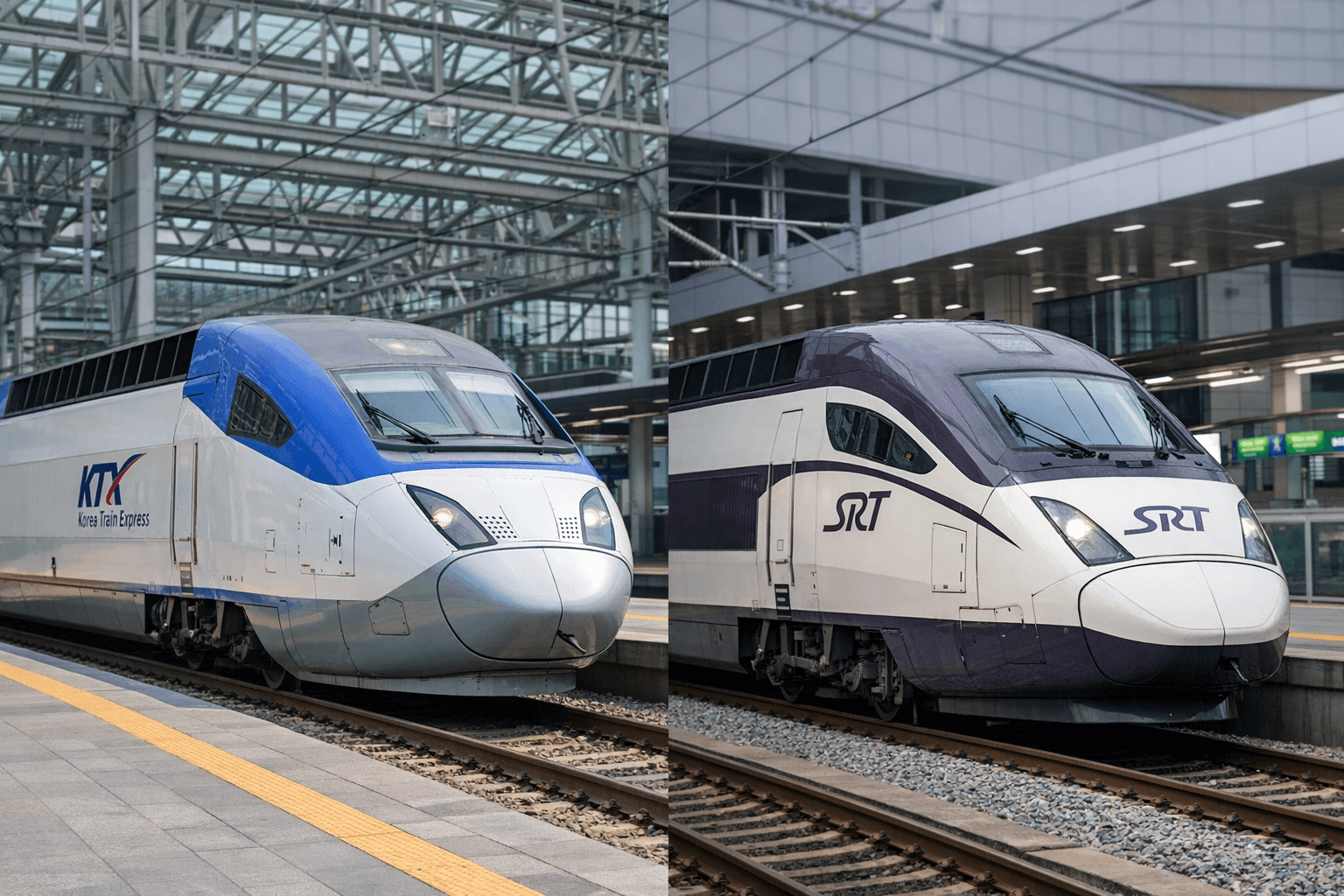
Photos: KTX by bryan… (CC BY-SA 2.0) and SRT by jmk2765 (CC BY-SA 3.0), via Wikimedia Commons and Wikimedia Commons.
If you’re traveling between Korean cities, you’ll usually see two high-speed options: KTX (Korail) and SRT (SR). They’re both fast, modern, and safe. The biggest practical difference for most visitors is which station you depart from.
Choose KTX if Seoul Station (or other Korail hubs) is more convenient for you. Choose SRT if Suseo (SRT) is closer—or if the SRT departure time fits better.
Key differences (simple table)
| Topic | KTX | SRT |
|---|---|---|
| Operator | Korail (Korea Railroad Corporation) | SR (separate operator) |
| Main Seoul area station | Seoul Station (major hub for most tourists) | Suseo Station (southeast Seoul; different access) |
| Speed & comfort | Very similar in practice (modern high-speed rail) | Very similar in practice (modern high-speed rail) |
| Routes | More nationwide coverage overall | Strong coverage on key high-demand corridors |
| Pricing | Often similar; depends on route/time/seat | Often similar; depends on route/time/seat |
| Best for | Tourists staying near central Seoul or using Seoul Station | Tourists staying closer to Gangnam/Jamsil/southeast Seoul (often) |
In practice, most visitors pick based on station convenience and departure time, not “train quality.”
The real deciding factor: where you start
Many tourists are based near areas like Myeongdong, Hongdae, Jongno, or City Hall—those are typically convenient for Seoul Station (KTX). If you’re staying in the southeast side of Seoul (often around parts of Gangnam/Jamsil), Suseo (SRT) may be easier.
How to book (official sites)
For the most accurate schedules and prices, book through the official sites. Foreign cards sometimes fail depending on bank security settings—if you run into issues, see the booking tips page.